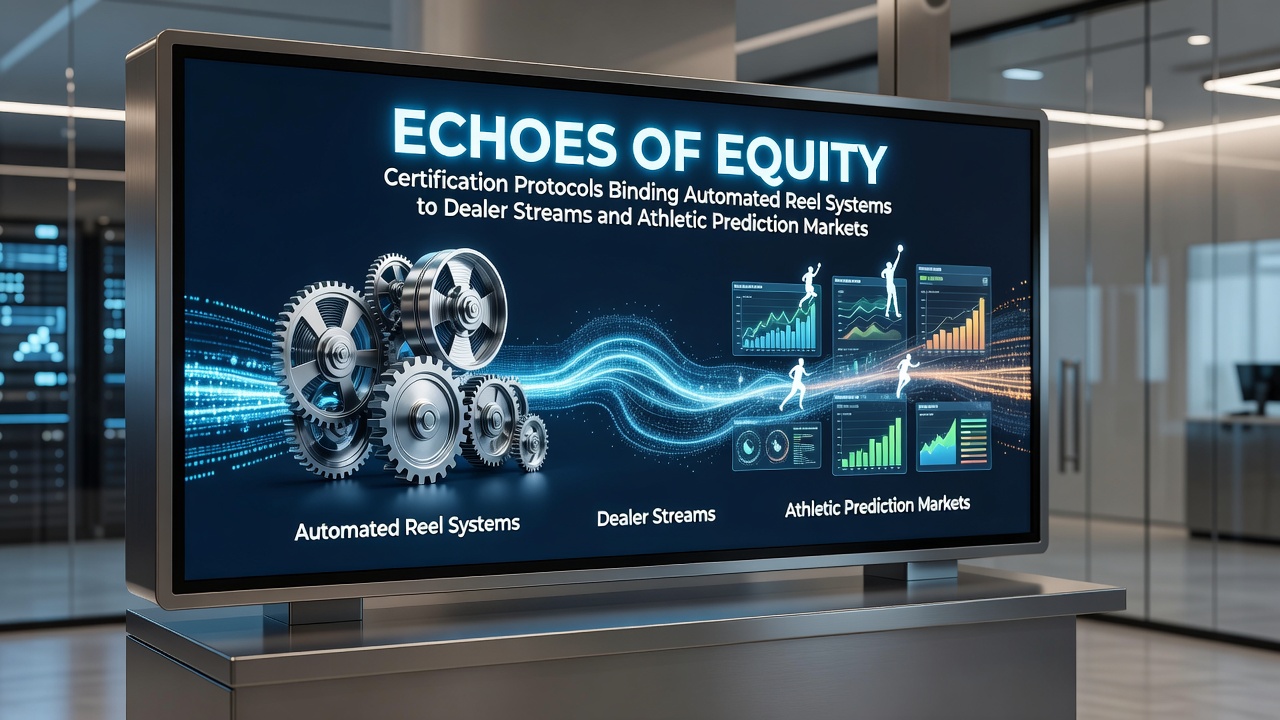
Echoes of Equity: Certification Protocols Binding Automated Reel Systems to Dealer Streams and Athletic Prediction Markets
Certification protocols have emerged as central mechanisms that align automated reel systems with live dealer streams and athletic prediction markets through standardized testing frameworks, and these protocols operate across multiple jurisdictions to verify fairness in outcomes generated by algorithms and human-assisted processes alike. Observers note that organizations such as Gaming Laboratories International conduct independent evaluations of random number generators in reel-based games while extending similar scrutiny to the software interfaces that support real-time dealer interactions and the data feeds that underpin sports betting odds.
Core Components of Certification Frameworks
Automated reel systems rely on certified random number generators to produce results that meet statistical benchmarks for unpredictability, yet these same standards now extend to dealer stream platforms where camera feeds and card shufflers undergo parallel audits to confirm that no external manipulation alters game sequences. Athletic prediction markets integrate live data from sporting events through certified interfaces that timestamp and validate odds adjustments, and certification bodies require these systems to demonstrate consistent performance under simulated high-volume conditions. Data from independent laboratories shows that testing cycles typically include thousands of simulated rounds for reels, thousands of card draws for dealer streams, and multiple event simulations for prediction markets before any platform receives operational approval.
Researchers at institutions including the University of Nevada, Las Vegas have examined how these protocols create interoperability between distinct product categories, and their findings indicate that unified certification reduces discrepancies in payout verification across slots, tables, and sports wagers. In practice, a single testing report can cover an operator's entire suite when the underlying engines share common modules for randomness and result logging, which streamlines compliance for multi-vertical platforms.
Integration Across Product Verticals
Live dealer streams present unique challenges because human elements such as card handling and wheel spins must interface with automated certification tools, and protocols address this by requiring cryptographic sealing of shuffle algorithms alongside periodic physical inspections of equipment. Athletic prediction markets add another layer through real-time data ingestion from external sources, where certification demands that odds engines reject or flag anomalous inputs that could distort market integrity. Those who manage these systems often discover that a shared audit trail allows regulators to trace a player's session from reel spins through dealer tables and into sports bets without gaps in the record.

August 2026 marked the rollout of updated interoperability guidelines in several North American markets, and these guidelines require operators to submit unified test results covering all three categories within a single reporting period. Figures released by the Nevada Gaming Control Board reveal that platforms adopting integrated certification experienced a measurable reduction in separate audit requests, while operators in Ontario noted similar efficiencies after aligning with provincial standards administered through the Alcohol and Gaming Commission of Ontario. The approach allows technical teams to apply consistent mathematical models to reel variance, dealer shuffle entropy, and sports odds volatility within one documentation package.
Technical Standards and Verification Methods
Certification laboratories employ statistical suites that test for bias, periodicity, and distribution uniformity across reel outputs, dealer card sequences, and predictive modeling engines, and these suites now include cross-referencing modules that verify result independence between verticals. When a reel system produces a bonus trigger, for example, the protocol can confirm that the subsequent live dealer round or sports market adjustment draws from an independent certified source rather than a shared seed that might introduce correlation. Industry reports compiled by the European Gaming and Betting Association document how such cross-vertical checks have become standard practice in licensing applications submitted after mid-2025.
Operators implement these protocols by embedding certified application programming interfaces that log every result with timestamps and hash values, which creates an unbroken chain from automated reels to dealer cameras to athletic data feeds. Technical staff conduct routine regression testing to ensure that software updates in one area do not compromise certification status in another, and audit schedules typically require full revalidation after any material change to the random number generator or data ingestion layer.
Regulatory Adoption Patterns
Jurisdictions in Australia and parts of Canada have incorporated these binding protocols into their licensing conditions, and applicants must demonstrate that reel, dealer, and sports systems operate under equivalent equity standards before market entry. The Australian Communications and Media Authority has referenced similar requirements in its guidance documents for digital wagering platforms, while Canadian provincial regulators have aligned their technical standards with international testing laboratories to facilitate cross-border operator compliance. These patterns show that certification serves not only as a fairness gate but also as a mechanism that allows operators to scale across product lines without duplicating audit efforts.
Conclusion
Certification protocols continue to evolve as the connective tissue between automated reel systems, dealer streams, and athletic prediction markets, and their adoption reflects a broader movement toward unified technical accountability in regulated gaming environments. Data collected through these frameworks provides regulators and operators with comparable metrics across verticals, which supports consistent enforcement and operational transparency. As platforms expand their offerings, the requirement for binding certification ensures that equity standards travel with the technology rather than remaining isolated within individual product categories.