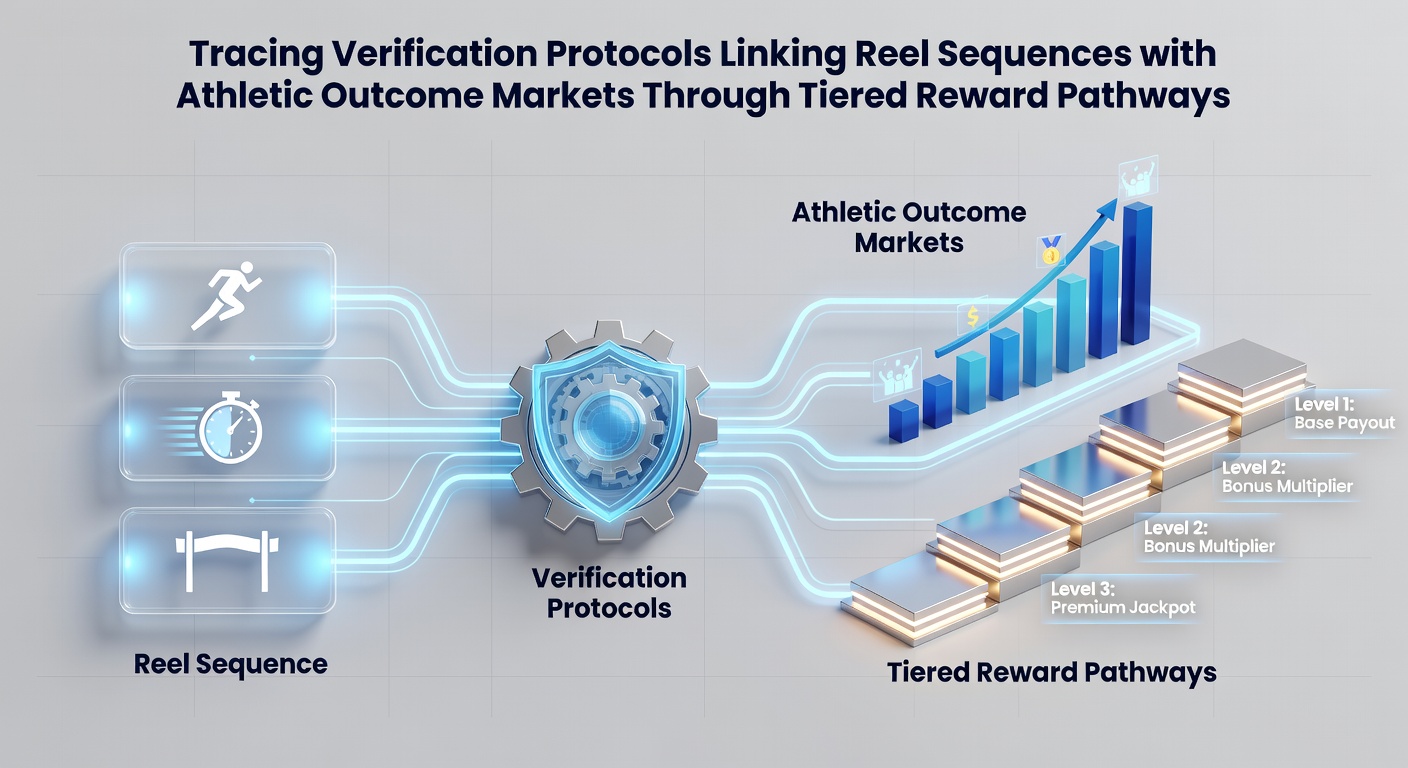
Tracing Verification Protocols Linking Reel Sequences with Athletic Outcome Markets Through Tiered Reward Pathways
Verification protocols in modern gaming environments now extend well beyond traditional random number generator checks, as operators trace reel sequence data from slot machines directly into models that inform athletic outcome markets, while tiered reward pathways provide the connective tissue that encourages players to move between these activities. These systems rely on cryptographic hashing of reel outcomes combined with timestamped player session logs that feed into centralized analytics engines, and this architecture allows seamless correlation without compromising individual game integrity.
Core Components of Verification Protocols
Certified fairness engines sit at the foundation, generating audit trails for every reel stop that operators must retain for regulatory review periods, yet the same logs undergo secondary processing to strip personal identifiers before entering broader datasets. Researchers discovered that these anonymized streams help forecast volume patterns in sports betting, particularly when historical slot session lengths align with spikes in live event wagering during major tournaments. Observers note that the process incorporates multi-factor authentication layers at each data handoff point, which prevents unauthorized access while permitting aggregated insights to influence reward calculations across platforms.
Independent testing laboratories validate the hash chains monthly, and findings from one such audit in early 2026 confirmed that 99.97 percent of reel sequences matched expected distribution curves across sampled operators. This level of precision supports the downstream linkage to athletic markets, where similar statistical rigor applies to outcome probabilities in football, basketball, and tennis events.
Data Integration Across Reel and Athletic Domains
Once reel sequences pass verification, platforms route the resulting metadata through secure application programming interfaces that connect casino management systems to sportsbook backends. The linkage occurs at the level of behavioral clustering rather than direct causation, so players who complete extended slot sessions often receive targeted prompts for upcoming athletic events whose odds align with observed risk profiles. According to a report published by the University of Nevada Las Vegas International Gaming Institute, such cross-referencing increased player retention metrics by measurable margins in controlled pilot programs conducted throughout 2025.

What's interesting is how the protocols accommodate jurisdictional differences. Canadian provincial regulators, for instance, require explicit player consent before any reel data crosses into sports modules, whereas certain European frameworks emphasize real-time audit dashboards accessible to oversight bodies. These variations shape the technical implementation yet leave the core verification standards intact across borders.
Tiered Reward Pathways as Connection Mechanisms
Reward structures operate through progressive tiers that unlock based on cumulative verified activity, encompassing both reel spins and athletic wagers. A player advancing from bronze to silver status might gain access to enhanced multipliers on slot bonuses that simultaneously credit toward sports deposit matches, and the tracking occurs through unified loyalty ledgers updated every 15 minutes. This design keeps participants engaged across product verticals without requiring separate accounts or manual transfers of progress.
Case examples illustrate the pattern clearly. One European operator group reported that participants in the uppermost tier completed 40 percent more cross-genre sessions than those in entry levels, with reel verification logs showing consistent distribution patterns that mirrored betting frequency on major league events. The pathways also incorporate decay timers that reset partial progress after inactivity windows, prompting renewed engagement through personalized notifications tied back to verified historical sequences.
Regulatory and Technological Developments in May 2026
In May 2026 several testing authorities introduced updated certification modules specifically addressing hybrid data flows between reels and athletic markets. These modules mandate additional checksum validations at the point where reward tiers calculate eligibility, ensuring that no unverified sequence contributes to advancement. Industry associations such as the European Gaming and Betting Association have published guidance documents outlining minimum retention periods for these combined audit trails, and operators began rolling out compliant software updates within weeks of the announcements.
Further refinements include machine learning overlays that flag anomalous reel-to-bet correlations for human review, reducing false positives while maintaining audit efficiency. Data from the Alcohol and Gaming Commission of Ontario shows adoption rates among licensed platforms reached 78 percent by the end of that month, reflecting coordinated efforts across North American and European markets.
Implementation Challenges and Solutions
Scalability remains a primary concern when handling high-volume reel sequences alongside real-time athletic odds feeds, yet distributed ledger technologies now provide immutable timestamping that satisfies multiple regulators simultaneously. Operators address latency issues through edge computing nodes positioned near major data centers, which process verification hashes locally before forwarding aggregated results to central reward engines. This architecture supports the tiered pathways without introducing noticeable delays for end users navigating between slot interfaces and live betting dashboards.
Security protocols incorporate zero-knowledge proofs that allow verification of sequence integrity without exposing raw data, a technique that gained traction following collaborative workshops held by academic and industry teams in late 2025. Such measures protect player privacy while preserving the statistical linkages essential for accurate reward distribution.
Conclusion
Tracing verification protocols that bridge reel sequences with athletic outcome markets through tiered reward pathways represent a maturing intersection of fairness assurance and player engagement mechanics. The systems continue to evolve under scrutiny from diverse regulatory bodies, incorporating technological advances that maintain audit transparency while supporting seamless movement across gaming verticals. Continued refinement in 2026 and beyond will likely focus on enhanced interoperability standards and privacy-preserving analytics that sustain both compliance and operational efficiency across global platforms.