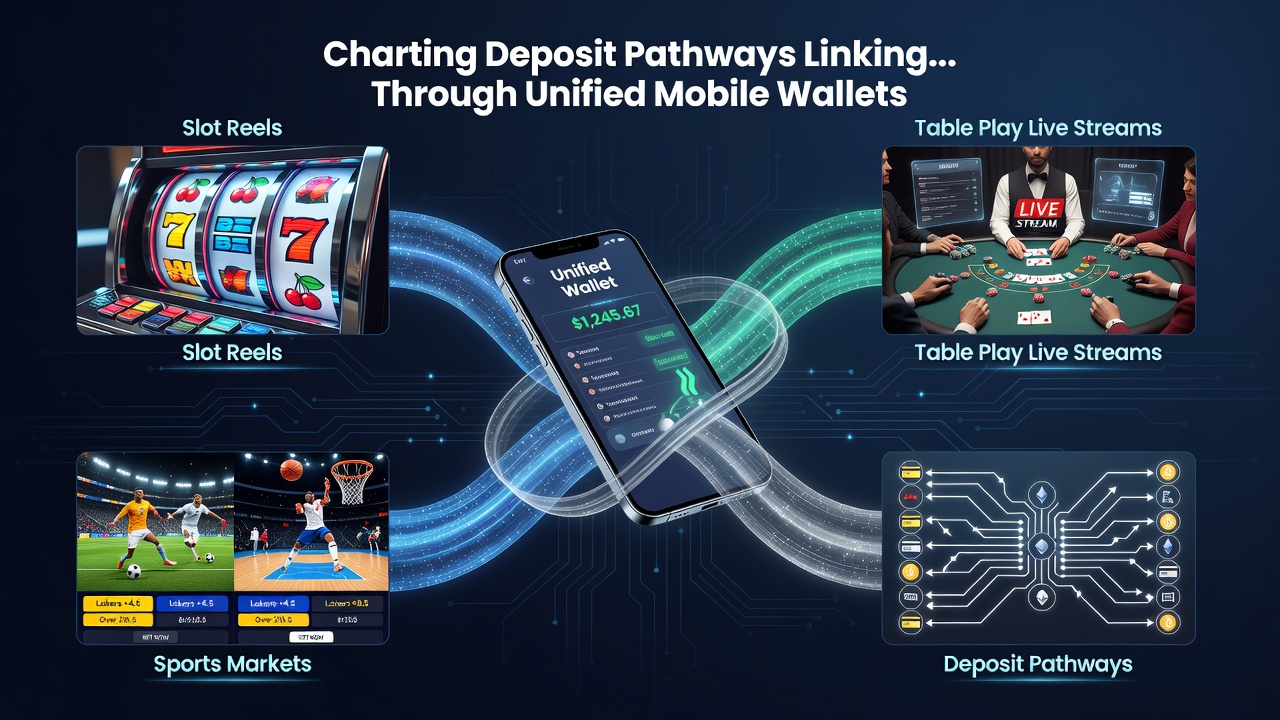
Unified Wallets Forge Pathways from Slot Reels to Live Dealer Tables and Sports Betting Markets
Operators now route player funds through single mobile wallets that connect slot reels directly to live dealer tables and sports markets without separate logins or repeated verification steps, while data from platform analytics in early 2026 shows deposit completion times dropping below eight seconds on average across integrated systems.
These wallets pull balances from bank accounts or cards once, then push credits instantly to whatever vertical a user selects next, and developers achieve this by embedding API calls that update ledgers in real time across slot servers, streaming platforms, and sportsbook engines simultaneously.
Mechanics Behind Cross-Vertical Funding
Wallet providers assign each user a tokenized account that holds value in a neutral ledger, after which the same token authorizes play on reels or tables or live odds feeds without triggering new compliance checks mid-session, and this structure reduces redundant KYC events that previously interrupted player flow between game types.
Regulators in multiple jurisdictions have examined these shared ledgers for audit trails, yet the core design keeps transaction hashes visible to operators while shielding full banking details from game servers, which satisfies data-protection rules without slowing transfers.
From Reels to Live Streams in One Tap
Players finish a slot bonus round and move remaining credits straight into a live blackjack stream because the wallet recognizes the table's buy-in request and settles it from the same balance, eliminating the need to cash out and redeposit, while session logs record the move as a single internal transfer rather than a withdrawal plus deposit pair.
Live-stream providers embed wallet buttons inside their overlays so viewers watching roulette spins can fund a seat without leaving the video window, and backend reconciliation happens through pre-approved merchant IDs that flag the transaction as gaming rather than a generic payment.

Extending teh Same Balance into Sports Markets
Once the wallet holds funds, users open the sportsbook tab and place pre-match or in-play wagers directly from the displayed balance, and any winnings return to that same ledger for immediate use on slots or tables if desired, creating closed loops that keep capital inside the operator's ecosystem.
Market data compiled by the Australian Gambling Research Centre through mid-2026 indicates that players using unified wallets shift between casino and sports products 2.4 times more often per session than those managing separate accounts, because friction points around funding disappear.
Security Layers and Regulatory Alignment
Encryption standards applied at the wallet layer cover both the funding source and every downstream transfer, while two-factor prompts appear only at the initial top-up rather than at each vertical switch, and this approach aligns with guidelines issued by the Nevada Gaming Control Board for multi-game platform operators.
Operators maintain separate risk engines that monitor velocity across all verticals from the single ledger, flagging unusual patterns whether they appear first on reels, during live streams, or inside sports markets, which allows compliance teams to review one consolidated record instead of three fragmented ones.
Player Journey Examples Observed in 2026
One documented flow starts with a £20 deposit into the wallet at 8:15 pm, moves £5 into a slot session that ends at 8:42 pm, shifts the remaining £15 to a live dealer table until 9:10 pm, and places a £10 football accumulator from the leftover balance before the match kicks off, with every step settled inside the same tokenized account and visible on a single transaction history screen.
Another sequence shows a user topping up via an e-wallet provider at lunchtime, using part of the balance for afternoon slot play, then directing the rest toward evening live-stream poker without ever re-entering card details, and platform metrics confirm the entire sequence completed with only one external payment authorization.
Conclusion
Unified mobile wallets now serve as the central ledger that links slot reels, live table streams, and sports markets through continuous balance updates rather than repeated external transactions, and operators who adopted these systems report higher retention across verticals because players encounter fewer barriers when moving between game types. Data collected through June 2026 continues to track how these pathways evolve as more platforms integrate the same wallet layer into both new launches and legacy migrations.